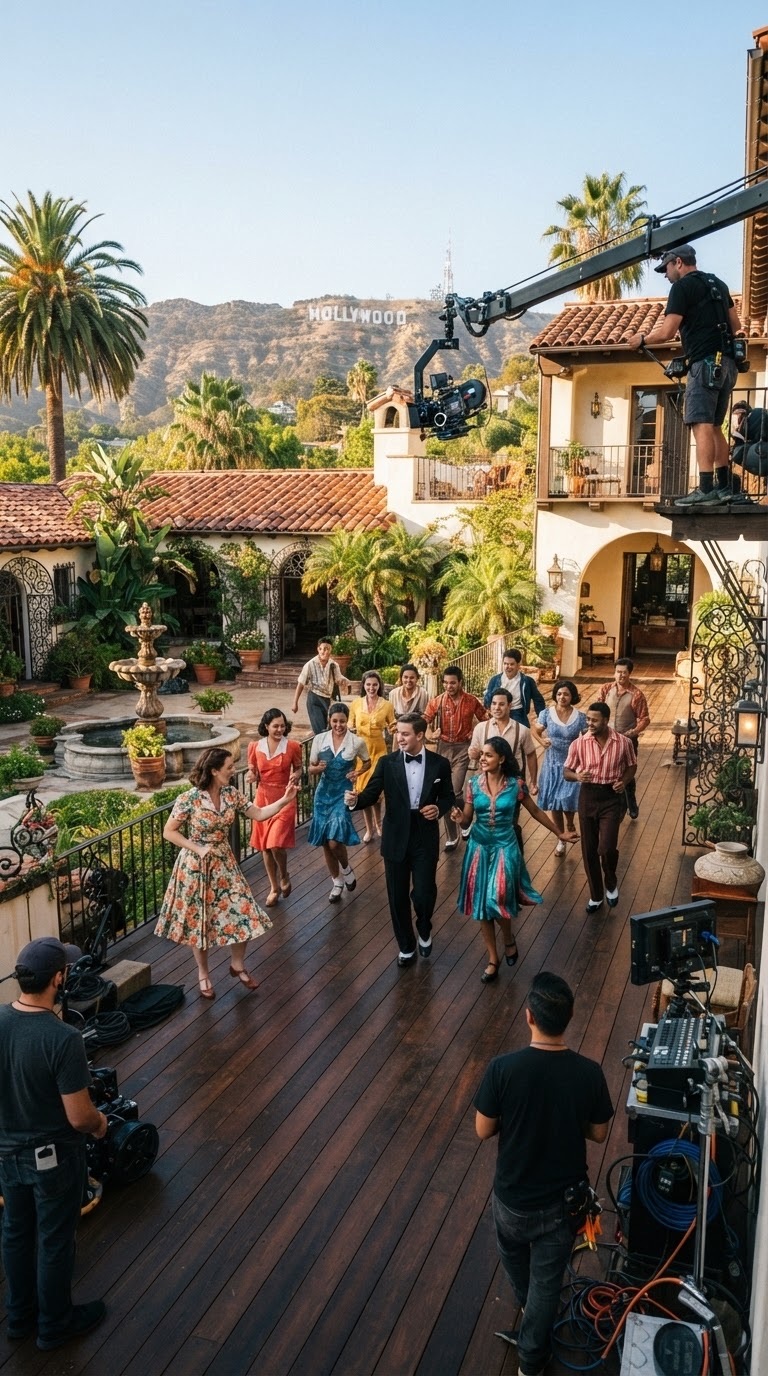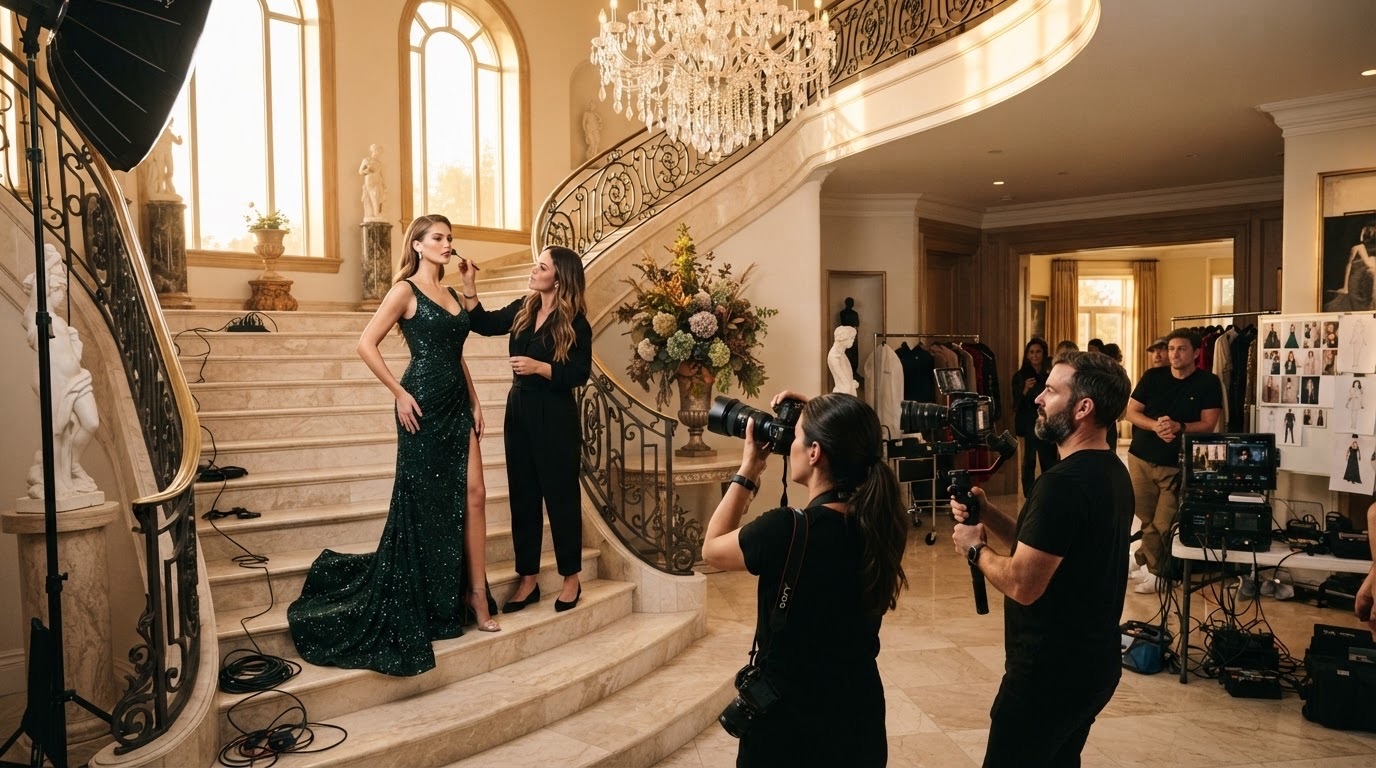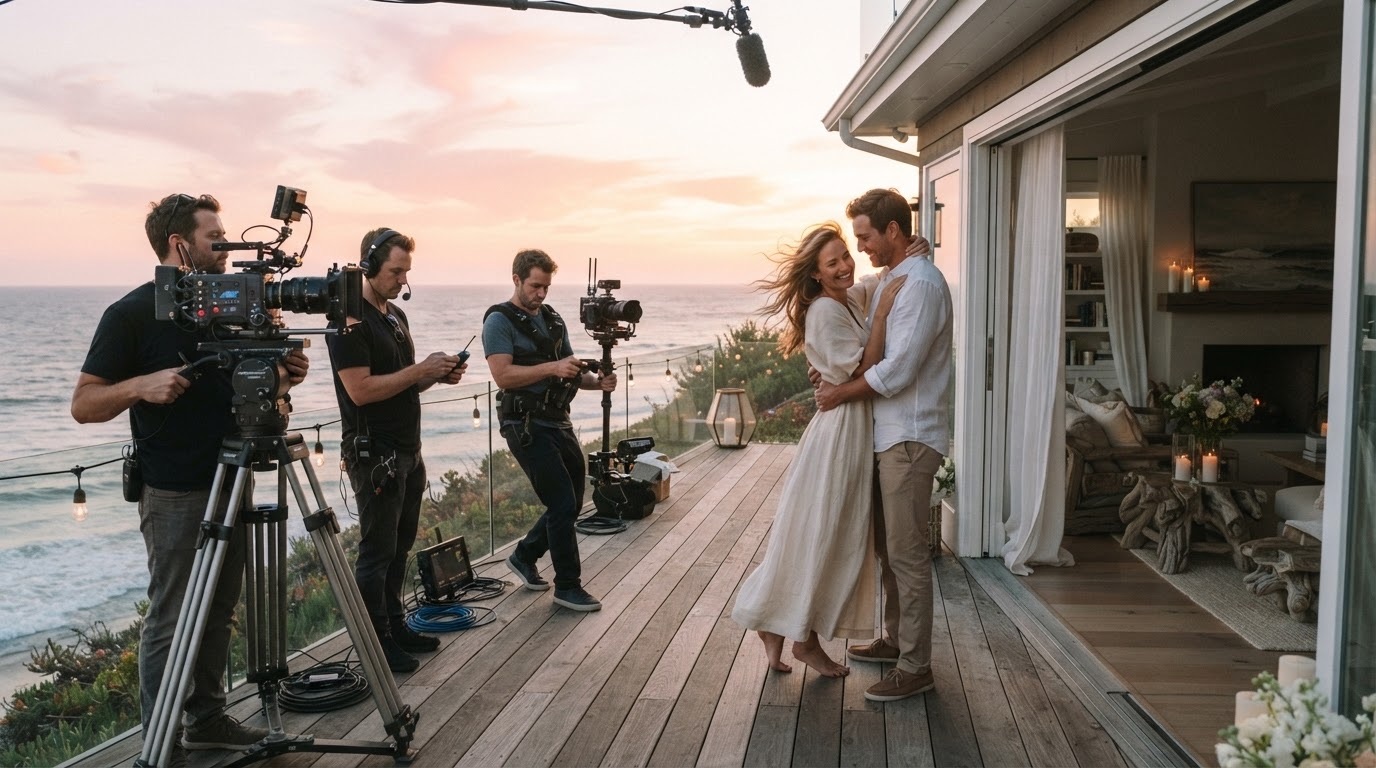
When a location scout walks through a house, they are not really looking at the house. They are looking at where the sun will be at 6:40pm, whether the hallway is wide enough to pull focus through, and where forty people will eat lunch. The most beautiful home in the city dies on a scout’s list if the answers are wrong.
Light is the first cut
Scouts track orientation before style. A west-facing great room with tall glass buys a production a long golden hour, which is the cheapest production value there is. Homes with controllable light — blackout options, scrim points, deep eaves — go further up the list, because a schedule that can shoot “day” at any hour saves real money.
Then comes the truck math
A shoot is a small logistics company. Camera, grip and electric, wardrobe, catering: for even a modest commercial that means five to ten trucks. Scouts measure the driveway, count street-parking signs and ask the question owners never anticipate — where does basecamp live? Properties with motor courts, flat lots or a nearby staging lot clear this hurdle instantly.
The most beautiful home in the city dies on a scout’s list if the truck math is wrong.
Sight lines sell the world
Directors buy backgrounds, not rooms. A kitchen that opens to a garden reads as a whole world; a stunning room with a neighbor’s wall in every window plays small. This is why scouts walk a house with a phone camera raised — they are testing what the lens sees, which is never quite what the eye does.
The quiet factors that close the deal
Production-friendly neighbors. An owner who can clear out in an hour. Honest square footage for staging. A house that has shot before, with its quirks already known. At Lux Life Estates every property in the portfolio is documented against this exact checklist — power, parking, light windows, dolly runs — so the scout’s first question is already answered before the first call.